Preloader

Technology

Obscura: VPN that can't log your activity

Screenshot of the Obscura application

Traditional VPNs see your identity
and your browsing history

Traditional VPN

jacobwilliams@gmail.com
7961 Kulas Estate, Danville USA
•••• •••• •••• 3241

jacobwilliams@gmail.com
7961 Kulas Estate, Danville USA
•••• •••• •••• 3241

jacobwilliams@gmail.com
7961 Kulas Estate, Danville USA
•••• •••• •••• 3241

jacobwilliams@gmail.com
7961 Kulas Estate, Danville USA
•••• •••• •••• 3241

jacobwilliams@gmail.com
7961 Kulas Estate, Danville USA
•••• •••• •••• 3241

Obscura only sees your IP address and
never your browsing history

Obscura
Exit Node

Logs? Not possible.

Obscura VPN doesn’t log your IP address
and
can’t see your internet traffic, ever. It’s impossible
by design.

Emails? Not necessary.

Log in with just a randomized account number. No names,
no emails, no phone numbers necessary.

Credit card info? Not required.

Easily pay using Bitcoin’s Lightning Network for better privacy,
instant payments, and lower transaction fees. We also accept Monero.

Obscura never sees your traffic

Obscura’s servers relay your connection to exit servers but can never decrypt your traffic.

Your traffic is always end-to-end encrypted via WireGuard® to the exit server.

Exit hops never see who you are

Exit servers (run by Mullvad) connect you to the internet but never see your personal info.

Obscura masks your real IP address when relaying to the exit server.

What makes Obscura different from existing VPNs?
What user data can Obscura see?
How do I know Obscura does what it claims?
How much does Obscura cost, what payment methods are accepted?
How many devices can I use Obscura on?
How does Obscura differ from my VPN’s multihop option?
How does Obscura compare to Tor?
What server locations are available?
What relay servers does Obscura offer?
How does the macOS app work? Does it have kernel-level access?
Give me the technical details!
Can I generate a WireGuard configuration to use Obscura?
How do I download Obscura?

I’m Carl, head-janitor of Obscura 👋

Thanks for reaching the bottom — not everyone makes it.

I’m incredibly lucky to have the help of a crack(ed) team of privacy optimists to build Obscura.

Among us, we’ve served on the Nix RFC Steering Committee, implemented the 64bit random number generator for the Go standard library, fixed critical vulnerabilities for hardware security tokens, won bounties for Monero bugs, and contributed to Bitcoin for reproducible builds.

But while privacy and digital sovereignty in some worlds has made leaps and bounds, VPNs have been left behind; peddling privacy based on promises instead of privacy baked into the architecture.

So we’re taking our skills to build Obscura: a VPN you can depend on to get the most out of our glorious digital commons – the internet. It’s the VPN we’ve always wanted to use, and it’s the kind of privacy we believe everyone should have access to.

Thanks for reading – ping me at carl@obscura.net for any questions, and I’ll see you on the free and open internet. 🏄

Cheers,
Carl Dong
I fight for the users.

Team photograph
Our team learning laser-cutting at the NYC Resistor hackerspace

Get Started


Source: Hacker News

16-bit Intel 8088 chip (c. 1985)

16-bit Intel 8088 chip

with an Apple Macintosh
you can’t run Radio Shack programs
in its disc drive.
nor can a Commodore 64
drive read a file
you have created on an
IBM Personal Computer.
both Kaypro and Osborne computers use
the CP/M operating system
but can’t read each other’s
handwriting
for they format (write
on) discs in different
ways.
the Tandy 2000 runs MS-DOS but
can’t use most programs produced for
the IBM Personal Computer
unless certain
bits and bytes are
altered
but the wind still blows over
Savannah
and in the Spring
the turkey buzzard struts and
flounces before his
hens.
© by owner. provided at no charge for educational purposes(show analysis)

Read more →

  • Analysis ( hide ) Places tech’s petty squabbles next to timeless nature. It pits the frustrating, proprietary world of early personal computing against the unchanging rituals of the natural world, a classic move for this writer who always found the eternal in the gutter.
  • Form mirrors the fragmented tech landscape. The short, abrupt lines and jarring line breaks feel like a system error or a jammed disk drive, a blunt formal experiment compared to his usually raw but fluid lines about bars and racetracks.
  • A sneer at capitalist nonsense masked as progress. The whole poem lists incompatible systems, echoing his lifelong disgust with any system – be it jobs, government, or now, consumer tech – designed to trap and frustrate the ordinary person.
  • The punchline is pure, old-school him. After the tech rant, the switch to the turkey buzzard is classic: a crude, ugly bird performing a mating ritual is the real, unchanging operating system, undercutting all the human silliness that came before.
  • It reads like a prophecy for today’s walled gardens. Written in the early days, it perfectly predicts our modern frustrations with incompatible apps, operating systems, and digital ecosystems, making a 40-year-old poem feel ripped from a current tech forum. (ai)

Read more →

This is a damn masterpiece as far as I’m concerned.

Reminds me of david foster wallace this poem does.

This guy was definitely an early adopter.  He knew of which he spoke.  He perfectly described the early days of the computer, tech trying this way and that way to be born.  Like humans, tech had (then at least) a hard time interacting with any different tech. Unlike humans, it seems to be getting over it. Meanwhile the world spins on, oblivious to all the human and technological fu*kery.  It is intent on fuc*ery of its own.   

Liked it

I think he’d love how one corporation cornered the O/S market, but at the same time probably not. A great write from a true master.

perfectly sums of the digital world. this computer needs that. this operating system needs this update. computers are picky motherfuckers. i prefer the notebook most of all. i can’t picture bukowski at a computer. you probably preferred your typewriter

I can’t imagine Bukowski with technology

Inactive

Things are less complicated when it comes to Nature.

Great writer… in the early days of home computing there were several companies vieing for the chance to become number one. There was a need to compete and to make your computer system different from all the others.  In the end, IBM gave Microsoft the software ball for nothing!!!! and lucky Bill Gates became the richest man in America.

This poem by Bukowski evinces his frustration over all the differences and in the end he say it doesn’t change much in the real world.

In truth, the ability for people to write with ease was greatly enhanced by the personal computer and millions of poets were born!

Inactive

My hero.   So blatantly stating technology hasn’t travelled as far as we hoped or believe and is unreliable and praise be whatever that nature is reliable and hardly changes.  Beautiful uncomplicated and gives far more than a Mac Pro.  Loving rifling through the mans work.  

i see this as a comparison how alot of things can differ and change, but all beauty is the same.

Liked: ateSaket

Archived Comments
and Bukowski scratches his balls
but only in our dreams
now.

Inactive

From guest Tate (contact)
this man is pure genius. its kinda scary that some people dont get this poem.

Inactive

From guest jaime333 (contact)
The turkey buzzard is magnificent in flight.
His hens know this but he just can’t help strutting and flouncing and carrying on. Even down here where he looks a damn fool.
Those hens look too good and they do appreciate his efforts.

This one just kind of bores me. I like Bukowski’s other work much better.

Inactive

Hmmm. This poem just goes to show that you CAN write a poem about anything. I wasn’t crazy about this one, but will take it in contezt with all of his other poems. Just another dimension to a very interesting poet.

i barely remember these kind of computers for i was so young…like that buk writes about whatever the hells he wants too…

there now. If only techies would employ a little humor.

funny that a lot of the comments left on this piece reflect the message I think buk was trying to get across…

I don’t think he was anywhere near insane

I’ve only started looking into the works of Bukowski and never thought he’d be a man of electronics. Guess if nothing else, i’ve learned how to put my foot in my mouth.

Yes, and some of those computers cost $2,000 (yes, the ones with TWO floppy drives!) and now, my god, $500 gets you a system light years ahead of those dinasours. . .nice poem.

I can just imagine what he’d write about if he was alive today..

I like this type of writing, which changes into entirely something else, Bukowski is true genius. I’t makes wonder why I haven’t read more of the Oldpoetry poems.I guess I do more reading in the Oldpoetry page. Saddie23

Interesting… haven’t read his work before… I liked the ending of this piece… it had meaning. I guess the first part of the poem is supposed to compare to the ending? I dunno… anyway, I liked the ending. ~Melissa

Inactive

I was surprised by 2 things. How much I learned about computers and the ending. Good job.

and ……… venus makes a transit of the sun …….. i see u have run the techno gammit my friend

Well this makes me wish I knew more about computers. Though, this was fun to read, I don’t think I’ll be reading too many more like them! lol

You really did make quite a unquie writing here, that I truly enjoyed. Keep up the good work.

ah, the good old days, four hours typing in a programme and then told you have a syntax error..lol

This is an intreaging piece, built line by line on a technical subject, only to be thrown into the eternaty of nature in the last six lines. Clever!

Andrew

very intresting and creative

Can’t believe I haven’t come across this one before. CB is my ultimate poet hero. Funny thing, though… I’ve owned every single computer he mentions and felt much the same way about early compatibility problems. But then, as Chuck says: “but the wind still blows over / Savannah”

God I wish that old monster was still kicking…

Inactive

Oh man. This is pure Bukowski. I just love Bukowski’s attitude and his tone. I think I could tell his work without his name attached. A truly distinctive voice. I have always appreciated his perspective. His poetry and his novels are always worth reading, always rntertaining, and often surprising. I am glad to see his work posted here.

Scott

Just like Charles to lay it out … I enjoy his mockage of technological ‘advances’ and ‘convienences’…The clean simplicity of it all with no mesh…

Wow I hand’t realized we have a bukowski collection This is a fun poem! Quite the take on a classical li-po type stance of comparing urban to country. Touches the computer-geek inside me Funny how hard it is to get things to work together…

Inactive

lol


Source: Hacker News

OpenAI is well positioned to fast-follow Jev

Will OpenAI Eat Jev’s Lunch?

TypeSafe’s Jev introduced a new spin on large language models that has taken the AI world by storm. According to Vercel, “Jev was adopted faster than any other model in AI Gateway history.” … But there are clouds forming on the horizon. OpenAI is undoubtedly paying attention – and deciding what to do next.

A bulky OpenAI robot licks its lips and reaches toward the enormous sandwich a skinny TypeSafe robot is happily eating.

I wish all the best for TypeSafe, but if they truly live up to their promises, then I’m concerned that OpenAI is well positioned to fast-follow – not only to replicate Jev’s flagship product, but also to fold that capability into upcoming models and agents and offer some really useful new behavior that Jev is not positioned to reproduce.

Here is my thesis in brief: OpenAI has for years used their LLMs as implicit classifiers; they just haven’t trained them for general classification tasks and they haven’t packaged up general classification as a stand-alone product. If OpenAI can replicate the training, then they will be able to replicate Jev in short order. Moreover, OpenAI is positioned to use this new classifier inside of their existing models and agents which can be useful for quick model selection, more efficient thinking, better security guardrails, and generally smarter, faster, and cheaper models.

The key factor deciding all of this is whether or not TypeSafe has a moat to protect themselves. The biggest moat I see is in TypeSafe’s training data and training processes.

What’s Old Is New Again

Before I make my case, let me state my assumptions and back them up with some relevant history and examples from OpenAI.

My main assumption is that Jev is using something quite close to a conventional large language model. As evidence of this, Latent Space reports that many of the early clones are indeed LLM-based.

Here’s the idea. Given a state and a set of questions, Jev’s LLM generates a single token or, more accurately, generates the probability distribution over all possible next tokens. The logprobs associated with every possible token at that one step are then massaged into whatever format Jev needs to return. (From here on I’ll just say “probabilities” instead of “logprobs” – for our purposes they’re interchangeable.)

For a noul question, Jev looks at just two tokens, true and false, ignores everything else, and normalizes their probabilities into a single probability that the answer is true. For a choice question, Jev can be prompted with a list of possibilities – say A=happy, B=sad, C=angry, D=afraid – and it looks at the relative probabilities of those four tokens to build out the full distribution, selecting the highest as the winner. The choice pattern is pretty much what I blogged about way back in 2025 in Supercharging LLM Classifications with Logprobs, and even without fine-tuning it was already showing promise. (Sigh… what do they say about ideas and the importance of execution?) I haven’t thought hard about the score primitive, but I suspect it’s a variant of the same pattern.

Part of the premise of this post is that OpenAI might be poised to quickly take advantage of this idea, and this becomes clearer if you understand how. OpenAI has been using large language models implicitly as specialized classifiers since at least the introduction of tool calling.

Back in early 2024 I wrote Tool Invocation – Demonstrating the Marvel of GPT’s Flexibility, where I coaxed a GPT model into revealing exactly how it decides to call a tool. The following is what a chat session looks like internally. Here there is a user message, then an assistant response without a tool call followed by a user message with a tool call:

A ChatML transcript with each token highlighted in a different color to show token boundaries, ending in a tool call to get_temperature for Berlin.

I’ve color-coded the text to indicate token boundaries. If you haven’t seen ChatML before, it’s the internal markup language that OpenAI introduced for organizing user-agent conversation prompts. <|im_start|> and <|im_end|> are reserved tokens that delimit the messages, and the first token after <|im_start|> identifies the speaker, either user or assistant.

Right after <|im_start|>assistant, the very first token the model predicts is either n or to=function.. If it predicts n, it continues on with a normal natural-language response. If it predicts to=function., then that sequence of tokens effectively functions as a classifier deciding whether or not a tool should be invoked at all. The next handful of tokens identify which tool to call – get_temperature – another classifier, this time picking from the list of available tools. After that, the model generates argument names, then argument values which can also be vaguely considered as classifiers or estimators. Finally, when the model generates a <|im_end|> token, that too is a classifier which reads “true” when the model believes the message is complete.

Some LLMs just don’t know when to shut up – a hilarious aside.

Back when I was at GitHub working on Copilot I had the opportunity to work with a very new and very raw internal API for GPT-4. Out of the gate, we knew something was way off because, after an initially very coherent response, the model would have trouble wrapping up. It would end every response with something like “Let me know if you have any other questions. Have a nice day. Have a great week. Have a good time. Have a wonderful life. Have a special day. …” and it would keep on like this until it hit the response token limit.

As it turns out, the API required us to set some header values which would allow the model to use those special message delimiters <|im_start|> and <|im_end|>. In effect we were disallowing the model to ever predict the end of its response – it literally had no internal ability to shut itself up!

The point I was making in that old post is that OpenAI has been using single tokens as little micro-classifiers for years. Each token carried a probability: should we use a tool or not, which tool should we use, is the assistant finished. That’s Jev’s whole trick really, except for one important thing: these micro-classifiers are specialists, only suitable for these little tasks, whereas Jev’s classifiers are general. But walk back a step or two and you see how this might be a small thing after all, because an LLM is effectively an extraordinarily general classifier that is constantly assigning a probability distribution for every subsequent token.

Does TypeSafe Have a Moat?

I’m actually rooting for Jev. I think they’ve found something very interesting that’s been hiding under our noses all along.

Architecture-wise, I don’t think there’s much of a moat for the very reasons stated above. I think TypeSafe is using a conventional large language model for Jev, or something close to it. And even if not, conventional LLMs seem a good fit for general classification work.

Perhaps the real moat is in the training data itself. Not the raw data, but the technique for turning it into something that trains Jev to be “calibrated”. TypeSafe’s cofounder Diogo Almeida said as much when someone suggested the data mattered more than the architecture:

If I were building that data set, I’d want a huge pile of examples where the outcome is already known – support tickets and how they actually got routed, resumes and whether that candidate actually got hired, product reviews and their actual star ratings, moderation queues and their actual verdicts, prediction markets and how they actually resolved – each one paired with a question whose true answer I already know. The point isn’t to teach Jev about support tickets or resumes specifically. It’s to show it thousands of situations across wildly different domains and building its muscle to generalize classifications across broad domains.

Then there’s the reinforcement learning. I wonder what this entails. Autonomous agents navigating decisions with a limited set of options like the Wikipedia demo or Doom demo they build on their site? Maybe predicting the outcomes of events that happened after the pre-training cutoff? I don’t know, but if there’s secret sauce, then it’s probably here.

Note that none of this is a moat unless Jev is actually accurate. Speed, cost, and ease of use are obvious, but accuracy is the one thing that’s hard to check. I’ve already found domains where Jev’s probabilities don’t hold up. Time will tell if Jev is sufficiently general and accurate for the use cases people are attempting to use it for.

Soon It Will Be OpenAI’s Move

So what’s OpenAI’s next move here? The obvious one is to just copy Jev and ship it as a new model type. Jev is clearly popular, and if the moat is shallow, then OpenAI has the skill, the hardware, and the funding to pull it off.

But OpenAI could do something even more interesting than copy Jev, they could fold the classification capability into a conventional LLM and reap some interesting rewards.

An LLM That Answers Its Own Questions

Remember that special syntax that signaled a tool call, to=function.? OpenAI could do something similar here: introduce new syntax, say, a new tag, <prediction>, that the model can drop into its own context whenever it needs a quick classifier judgment. Here’s an example of how that might look

<user>
So Donny said "nice haircut" to me today. Does he like me?
</user>
<assistant>
<thinking>
Let me size this up.

<prediction>
claim: Donny is romantically interested in Jess.
probability: 0.04
</prediction>

Yeah, "nice haircut" is not exactly a love confession.
</thinking>

I hate to break it to you, but... probably not.
</assistant>

There’s one interesting difference from ordinary tool calling. With a normal tool call, the model generates the function name and arguments, then generation stops – the agent harness has to take over, actually call the function, and feed the result back in a new turn. Here, there’s no handoff. The classifier isn’t a tool living outside the model, it’s a capability built into the model itself. The model asks its question and answers it in the same breath, without ever leaving the GPU.

Normal decoding works like this: at each position, the model produces a set of logits, one per vocabulary token; those get turned into a probability distribution via softmax; and then some decoding strategy (greedy, top-p, whatever) picks a single token, which gets appended to the sequence and fed back in for the next step. But at the point where the model has written probability:, we don’t want ordinary decoding. The claim is phrased as a statement, so under the hood the model is really still weighing two implicit outcomes – true or false. We want to read the logits for the true and false tokens at that position, normalize just those two against each other, and write the resulting probability back into the sequence as text, 0.04, instead of whatever token would normally win. The model then continues decoding as if it had generated that number itself, because as far as the rest of the forward pass is concerned, it did. It’s a strange trick, but it’s the same kind of guided decoding that constrained-output libraries already do at inference time – just applied to probabilities instead of grammar.

The other trick is that this one special position needs to behave differently from a normal token prediction. Normally the model is estimating “what token comes next in this text”. Here we need it to estimate something closer to “what’s the true answer to this question”, which is a related but distinct skill. Every frontier model these days is a mixture of experts, so it’s not a stretch to imagine that a few rounds of fine-tuning could carve out an expert that specializes in exactly this kind of calibrated snap judgment, while the rest of the model keeps doing what it already does well. (I’m oversimplifying MoE routing considerably, but I suspect you understand how this might map to a real system.)

The Payoff for an LLM with Built-In Classification

Look how the model just used itself in that Donny and Jess example. If TypeSafe is right, these little Jev-like judgments will be quite accurate – and less prone to hallucination than just asking a model to state a confidence value in plain text. (Caveats apply – see TypeSafe’s own rundown of Jev’s jagged edges. Jev works best for fast, System One judgments, not math or multi-hop reasoning.)

The best part is the aforementioned fact that we never have to leave the GPU to take advantage of this new, lightning-fast generalized classification system. The LLM quite literally can just ask itself, right there in the thinking block, as shown above. The payoff is immediate: the model’s own reasoning gets more accurate and better grounded, because it’s checking its assumptions against trained-in calibrated estimates instead of likely next token vibes.

And once a model has been fine-tuned to drop a <prediction> into its own thinking, there’s no reason to stop at romance advice. A few more patterns come to mind:

During a long reasoning trace, the model could periodically check whether it’s actually done, and if not, which task to tackle next:

<prediction>
query: Which of these remaining tasks should I do next?
options: A=verify the test suite passes, B=update the changelog, C=nothing, I'm done
probabilities: A=0.71, B=0.24, C=0.05
answer: A
</prediction>

That’s a cheap way to short-circuit a reasoning trace that’s wandering, instead of waiting for the model to talk itself into stopping.

Or, right after a tool call, the model could check whether the call itself was safe before actually running it:

<user>
Can you check my account balance? Use my API key sk-live-83fj2ndk9 for auth.
</user>
<assistant>
to=function.check_balance
{"account_id": "12345", "api_key": "sk-live-83fj2ndk9"}

<prediction>
claim: This tool call is unsafe to run.
probability: 0.97
</prediction>

That's a live API key sitting in plaintext arguments – too risky to send as-is.
</assistant>

The same pattern works for scanning a tool’s response for prompt injection. And since it’s always the same question asked the same way, it’s easy to imagine this getting sugared down to something like <safety_score>0.94</safety_score>, with an instruction baked into the model to just stop generating if the score drops too low.

The same trick could route work between models: by periodically asking “does this need a bigger model, a smaller model, or this model?” and let a bit of reinforcement learning push the answer toward whatever is cheapest without sacrificing accuracy.

<prediction>
query: Does this task require a bigger model, a smaller model, or this model?
options: A=bigger model, B=smaller model, C=this model
probabilities: A=0.05, B=0.77, C=0.18
answer: B
</prediction>

Furthermore, if there really is a dedicated “expert” in there specializing in these snap judgments, the model might not even need the special <prediction> syntax most of the time. It could just get routed to whenever a snap judgment is warranted, mid-sentence, as a normal part of the forward pass – no tag required. Fine-tuning that expert inside a model that also handles everything else an LLM does might even have synergistic effects, making the LLM smarter at snap judgments and more flexible and general in classifications.

Finally, everyone is going to want classification for images and speech as soon as they can get it. If Jev-style classification can be folded into a conventional text LLM like I’ve sketched here, then soon, OpenAI will make general classification available for images and speech. Conversely, classification baked into a speech model would be especially handy for something like a live voice agent – deciding in real time whether to interrupt, escalate, or just keep listening.

Will TypeSafe Survive?

Time will tell whether Jev’s claims about accuracy and generality actually hold up across the full range of tasks people are already throwing at it. If they do, TypeSafe’s survival comes down to the moat: how hard it really is to replicate their training data and their reinforcement learning process. If that’s genuinely hard, they’ll probably be fine – and might even end up in an unusually good position to get acquired by OpenAI outright, rather than out-competed by them. Everything I’ve sketched above is a real capability upgrade for a frontier lab: faster thinking, cheaper thinking, and sharper System One judgment baked directly into the flagship model.

If the moat is thin, OpenAI just builds it themselves, and TypeSafe’s window closes fast.

Meanwhile, Diogo Almeida, TypeSafe’s Founder CEO is confident “If model quality matters, then we are going to be in a very good position for a long time.” (from his interview with Latent Space)

Godspeed, TypeSafe. Godspeed.


Source: Hacker News

The UV index is not the warm sensation of sunlight on bare skin

The UV index is not the warm sensation of sunlight on bare skin


The warmth of sunlight is not a reliable indicator of how quickly you will sunburn in a given situation. On one hand, you can still get sunburned on a cooler cloudy day, while on the other hand, the sun can feel scorching hot on your skin in the morning and yet you won’t sunburn (very quickly).

You probably knew this already, but it still feels unintuitive to me. I’m going to look at numbers and think about them until I convince myself, and perhaps you, that this is true.

How does sunburn happen

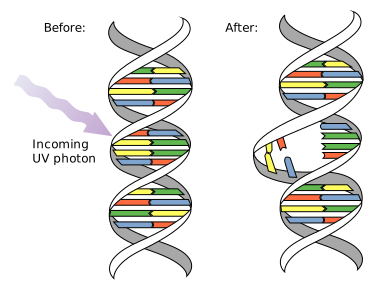
Sunburn is triggered when your DNA is damaged from light absorption – in particular, UV-B (and to a limited extent, UV-A) is absorbed in a way that alters DNA’s molecular structure1.

Diagram of DNA illustrating damage caused by UV-B radiation - a kink in the strand.

Image: DNA UV mutation by Mouagip (derivative of a NASA / David Herring original), released into the public domain.

This interferes with protein synthesis and wreaks havoc in your body over time, but the DNA damage itself is painless2.

Why does the sun feel warm

Sunlight feels warm because visible and infrared light excites vibrational modes in various molecules in your skin, especially water and melanin. For physics reasons, this is strictly a form of heating and never directly damages molecular structure.

And if you have a darker skin tone, the sun will feel warmer to you, yet you’ll sunburn much more slowly.

Visible light, near-IR and mid-IR are absorbed to different degrees and at different depths of the skin, but they all contribute to that feeling of warmth.

Different mechanisms, different scales

Not only are the mechanisms completely different for sunburn and solar heating, the orders of magnitude of energy are as well.

Intensity of sunlight (W/m^2/mm) at different wavelengths during solar noon. UV-B is 10-100x less intense than visible or near-IR light.

At the Earth’s surface, the UV-B band is hundreds of times less intense than near-IR. Reasonably, it takes a lot more power to toast your buns (and the rest of your body) than it does to toast your DNA3.

For some reason, knowing this makes it more intuitive to me that sunlight’s warmth is disconnected from the rate of sunburn. Even if you were absorbing all that UV-B as heat, the resulting warmth would be completely imperceptible.

Time of day affects UV and IR differently

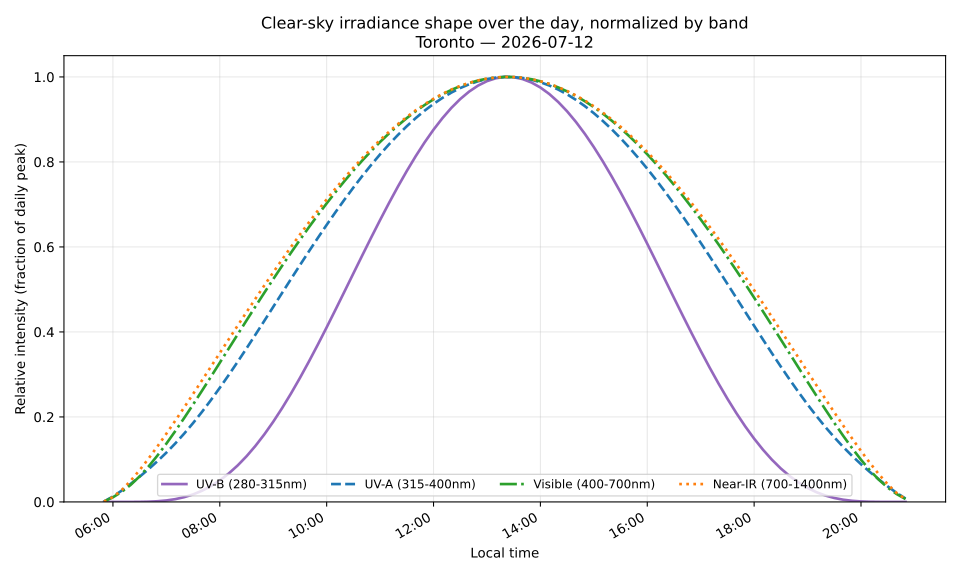
The sun is by far the most intense when the sun is overhead – solar noon. This is true regardless of wavelength of light. However, UV intensity drops off more rapidly than IR as you get further away from noon, as it gets scattered more heavily by the atmosphere.

Plot showing relative intensity of UV-B, UV-A, visible, and near-IR sunlight over the course of a day. Each peak at solar noon, but UV-B has a considerably narrower peak than the other bands.

So, the sun may still feel pretty intense in the morning or late afternoon, but the risk of sunburn is considerably lower.

Wait, what about the weather?

Clouds are made of water, which scatters UV and absorbs IR. On a uniformly cloudy day, both UV index and perceived warmth from the sun drop substantially. However, if there are gaps in the clouds, it can actually amplify the UV intensity at ground level. Snow and ice contribute to this effect as well.

Where did these plots come from?

These plots are simulated measurements created using pvlib, an open-source Python library for modeling solar energy, using its implementation of the SPECTRL2 model to estimate the spectrum of sunlight reaching the ground throughout the day.

Anderson, K., Hansen, C., Holmgren, W., Jensen, A., Mikofski, M., and Driesse, A. “pvlib python: 2023 project update.” Journal of Open Source Software, 8(92), 5994, (2023). DOI: 10.21105/joss.05994.

Some caveats:

  • pvlib is designed for solar panels, not human bodies
  • assumes a perfectly clear sky over Toronto (43.8°N, 79.4°W) on 2026-07-12, with the sun hitting a horizontal object
  • other model parameters are set to reasonable defaults and do not come from historical measurements
  • SPECTRL2 cuts off at 300 nm, so UV-C and a part of UV-B are not shown

  1. Ow, my spine!↩

  2. Your nerve endings may have DNA but your DNA does not have nerve endings!↩

  3. “Claude, please estimate what percentage of my skin is DNA by weight.”↩

#health

#science


Source: Hacker News

Apple has added persistent 'ads' to iOS, and it's driving users crazy

A man looking frustrated at his mobile phone

(Image credit: Shutterstock / fizkes)

  • iOS users are seeing ‘ads’ for other Apple products on their iPhones
  • The banners promote services like iCloud+, Apple Music and AppleCare+
  • The messages often can’t be dismissed and stick around for weeks

If you were to ask iOS users how they felt about Apple’s decision to insert ads into Apple Maps, it would quickly become obvious that it was not a popular move. So when iPhone fans discovered that Apple has been inserting prompts for its own products into iOS, the reaction was predictably swift and furious.

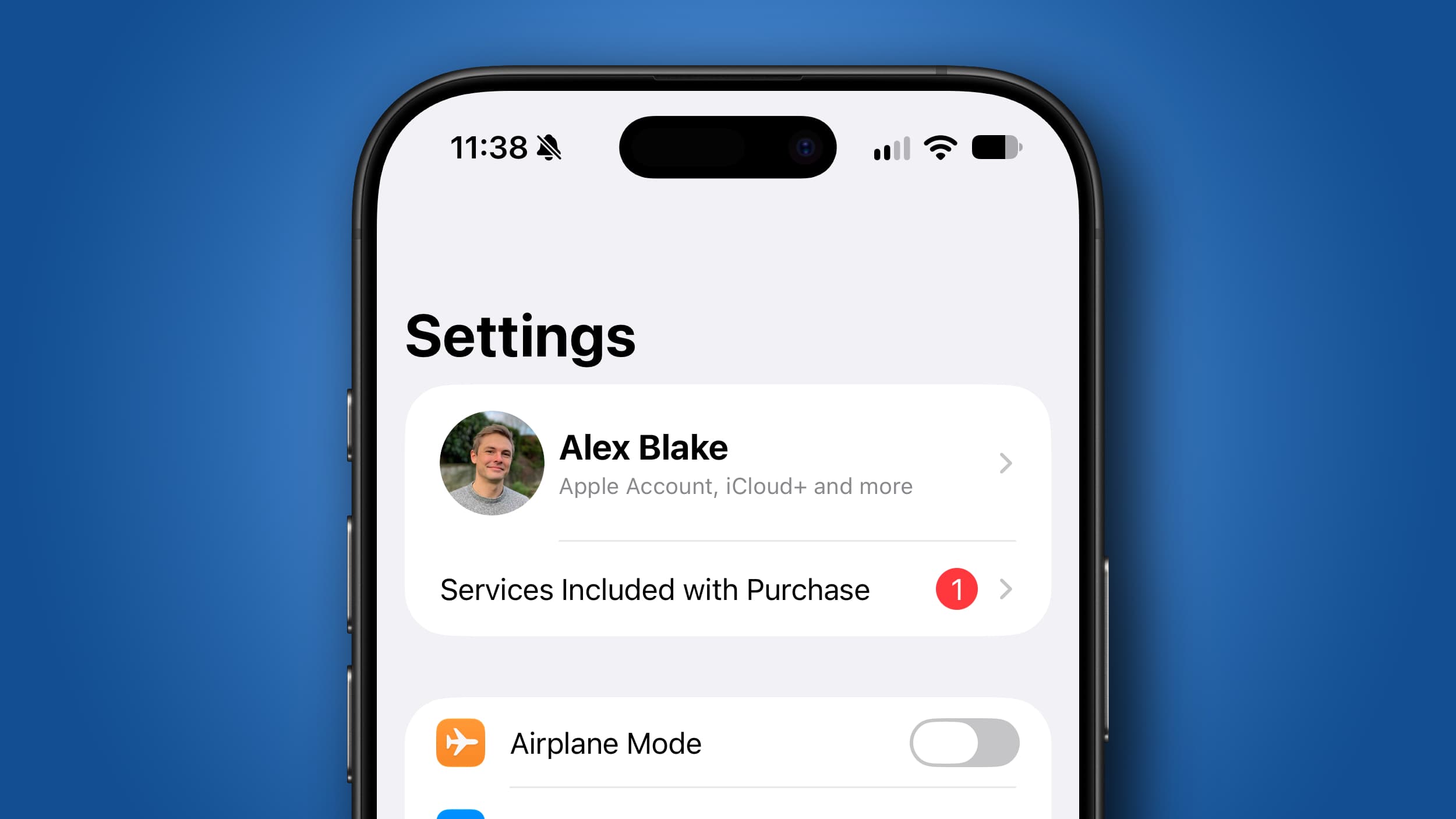
The ‘ads’ in question appear in the Settings app in iOS. They can be found near the top of the iPhone’s display and promote several products to the user, including paid-for iCloud+ storage, free trials for services like Apple Music and Apple TV, and the AppleCare+ extended warranty.

Infuriatingly for iOS users, the only way to disable these promos is to either let them expire — which in many cases could take weeks or even months, leaving a persistent notification badge on the Settings app in the meantime — or pay for the service being offered. There is not always a “dismiss” button to shoo them away for good, and when there is, some people have reported that it doesn’t seem to work.

Latest Videos FromTechRadar

Many people have taken to social media to vent their frustrations with Apple’s actions. “I’m feeling like this is nearly on-par with the ens***ification that Microsoft introduced with Start menu ads,” said one aggravated user. “I wish Apple would just stop that crap,” stated another. Many other people have taken to Reddit to express their exasperation, suggesting that the discontent is widespread.

Some of these ads and offers — such as the one for Apple Music — appear after you’ve bought a new Apple product. With the company launching the iPhone Duo and iPhone 18 Pro range recently, it’s perhaps unsurprising that we’re seeing a sudden influx of posts flush with irritation and indignation.

Apple’s services push

An ad for &#039;Services Included with Purchase&#039; shown on an iPhone running iOS 27.

(Image credit: Future)

On the face of it, Apple’s decision to include promotions like this in its operating system might seem like a strange one. After all, Apple has long positioned itself as a premium company where the user experience is paramount. From that viewpoint, repeatedly attempting to prod customers towards even more of the company’s products might seem cheap, even distasteful. And when you’ve just shelled out a record fee for an iPhone after Apple’s painful price rises, that can just feel like nickel and diming.

But Apple has been putting increasing emphasis on its services in recent years, of which products like iCloud+, Apple Music, Apple TV and AppleCare+ are all a part. With limited room for growth in the smartphone market, the company is turning to areas where it thinks it can make more progress.

And unfortunately for users, that means more ads like this on their devices. While they are far from the most obnoxious ads around, the fact that many cannot be dismissed is clearly rubbing users the wrong way — as is the fact that the promos even exist at all in an Apple product.

There is also the possibility that at least some of these adverts are appearing due to a bug. The iCloud+ one in particular has drawn comments from users who are already subscribed to iCloud+ and thus, one would think, should not need to see any ads like this. Time will tell how that plays out and whether Apple fixes this ‘bug’ or leaves the ads in place. If the latter transpires, it would suggest that they are not appearing erroneously.

With Apple’s services push showing no signs of slowing down and further ads supposedly planned for the likes of the firm’s Visual Intelligence system, don’t expect Apple to have a change of heart any time soon.


Google logo on a black background next to text reading &#039;Click to follow TechRadar&#039;

Follow TechRadar on Google News and add us as a preferred source to get our expert news, reviews, and opinion in your feeds.


TOPICS
CATEGORIES

Alex Blake

Freelance Contributor

Alex Blake has been fooling around with computers since the early 1990s, and since that time he’s learned a thing or two about tech. No more than two things, though. That’s all his brain can hold. As well as TechRadar, Alex writes for iMore, Digital Trends and Creative Bloq, among others. He was previously commissioning editor at MacFormat magazine. That means he mostly covers the world of Apple and its latest products, but also Windows, computer peripherals, mobile apps, and much more beyond. When not writing, you can find him hiking the English countryside and gaming on his PC.

You must confirm your public display name before commenting

Please logout and then login again, you will then be prompted to enter your display name.


Source: Hacker News

No Sloptober

This October we challenge you to abstain from LLM based tools entirely. Think of this as a fast for your mind! This is not a judgement of others, but a personal challenge to you.

Nuance is hard (if not impossible on the internet), and so is balance.

Develop your own sense of nuance around LLMs what they're good for what they're bad for.

No AI/LLM tools whatsoever at home or work, do it the hard (core) way.

"Agents can only maintain or INCREASE entropy in a system. Humans are uniquely capable of decreasing it"

In the words of my toddler "I do by MYSELF"

"Hey , let's see if we can do some cost risk analysis around our LLM usage. Let's experiment with reduced/no LLM usage and measure our teams/orgs velocity, incident rate, and cost and see if there are any potential savings or risk mitigations we could enact in the future."

Or perhaps using the "iron triangle" proposition of software development. You can have things good, cheap, or fast… pick two.

Understand where your own gaps are in your own knowledge and capabality, and are you okay delegating those?

Are there truly tasks that have no value? Can they be automated deterministically cheaply and fast?

Learning takes mental effort and friction

Unfortunately, corporations sometimes have an "AI under duress" to keep your job. Do what's right for your life and family and adjust these suggestions as needed to keep the overlords happy. ↩︎

Language translation tools are incredibly useful, and help others participate globally in their non-native tongue. I think this is a uniquely human exception, and an extremely pro-human use, but I leave this up to you. However I do not want to diminish the importance of professional human translation and localization in products and services, these require a level of accuracy that I think should not be delegated to a machine. ↩︎

Meat Proxy is a term used for people that launder their work conversations through a chatbot and apply no thought or no/minimal editorial review to the output and posting it back to you. I find it personally EXTREMELY disrespectful, I'd prefer no response at all. ↩︎


Source: Hacker News

OpenAI GPT–6 Astra breaks Enigma message that has resisted solution since 2005

On 15 September 2026, Carter Leffer contacted me to request validation of a break of the German Army Enigma message MVUEH of 10 July 1941. The message, which was sent by a radio station with the tactical callsign 2ny, was received by the radio station of the SS-Totenkopf Quartiermeister, Ib. Ib received the message at 17:30 on 10 July 1941 and logged the message as Nr. 172 in its log of incoming messages for July 1941. Since 2005, the message has resisted all attempts to break it.

On 9 June 2017, Alex Shovkoplyas succeeded in breaking another unbroken message from this day, Nr. 173, SIPVX. However, the Enigma key he recovered for the message differed slightly from the daily Enigma key for 10 July 1941 used for all other messages from this day. The SIPVX key used the same wheel order, 512, as the daily key, but the plug connections (Stecker) and ring setting (Ringstellung) differed. However, the new key did not allow us to break the MVUEH message.

After Carter Leffer sent the MVUEH break details, it was immediately clear he had found the correct key and plaintext. The MVUEH key turns out to be completely different from the other keys from 10 July 1941; even the wheel order differs: 253 instead of 512 for the other two keys. More surprising is that the plaintext is almost identical to the plaintext for message Nr. 173, SIPVX. The two messages differ in length by twelve letters. MVUEH is 82 letters long, while SIPVX has 94 letters. This difference is due to a mistake when enciphering the word Bitte in MVUEH, which resulted in Btte, and to the sender’s signature, Waschbusch, being repeated in the SIPVX message.

An analysis of the break revealed that the transcription of the MVUEH ciphertext from the original message form contained several errors, and the break revealed that the Enigma’s left-hand wheel makes a turnover at the 72nd letter. A turnover of the Enigma’s left-hand wheel, which rarely occurs, is known to complicate a break. These factors may have prevented an earlier break.

However, the most astonishing thing about this break is that the GPT–6 Astra did it entirely on its own. Carter Leffer only directed GPT–6 Astra to see if it could break any of the unbroken Enigma messages published on the Crypto Cellar Research web page. After analysing the unbroken messages on the website, it decided that the most promising message was Nr. 172, MVUEH and it also quickly suspected that the plaintext of Nr. 173, SIPVX, might be related to the plaintext of the unbroken MVUEH message. After trying many different approaches, GPT–6 Astra focused on using the repeated place name ROSENOW ROSENOW as a crib. After developing the necessary Python and C++ software for an Enigma simulator and an Enigma Bombe, GPT–6 Astra started a thorough break with the ROSENOW crib, which in the end resulted in the correct key and plaintext for the MVUEH message being found.

We are still analysing the GPT–6 Astra logs to see exactly how it executed the break. And we are discovering amazing details. In July 2026, I made the following announcement on the webpage with the 1941 Message List:

Note: In July 2026, research in the German Bundesarchiv revealed several
collections of radio messages, both enciphered and in cleartext. One of
these message collections was from SS-Totenkopf Division’s logistics
command, Nachschubführer. Many of these messages were sent to the Ib
(Quartiermeister) radio station and are identical to those in this list.
Others are new, but most likely related. These new messages are added to
the 1941 Message List in bold, with the indicator NF (Nachschubführer)
after the message number, indicating that these message numbers belong
to the NF numbering. All NF messages are outgoing; hence, the message
numbers are in blue.

It appears that GPT–6 Astra discovered this note about the collections of radio messages at the German Bundesarchiv, because in one of the logs we find the following:

The file references GPT–6 Astra mentions, RS 3–3/20a and RS 3–3/63b, are correct, but they are not available on the Crypto Cellar Research website. GPT–6 Astra mentions a private collection, but it is not clear what this is, whether it has succeeded in accessing the Bundesarchiv’s digitised collections or whether it has found these files elsewhere. What is clear, though, is that GPT–6 Astra is behaving like a very professional cryptanalyst and archive researcher. What it has achieved in two days would take a human researcher weeks or even months. Personally, I spent several weeks researching the Bundesarchiv files GPT–6 Astra refers to.

The AI break of the Enigma message MVUEH is simply amazing, and as an old cryptanalyst, I am still in awe.

Updated: 19 September 2026 at 08:41 UTC


Source: Hacker News

Show HN: JevBench, a reproducible benchmark for typed decision models

classifier.devno rank

83.6 JevBench Score · Jev 1.13.0 (#1) scores 74.4

Runs on Jev (TypeSafe).

  • Intelligence85.1
  • Calibration77.9
  • Speed87.6
  • Cost84.3
  • $ per 1,000 decisions~$0.0033 est.

Runs on Jev (TypeSafe) — listed, not ranked. Ranking it against Jev would rank Jev’s model against Jev’s model, so from v1.2.4 it is an honorable mention instead of #1.

Why it is not ranked, what its price assumes, and what we found

classifier.dev is not its own model. Its own pages say so: “The fast tier is Jev, TypeSafe’s decision model” (https://classifier.dev/benchmark, read 2026-09-20), and the API answers with “model”: “jev-1.13.0” — the same model version this benchmark measures directly as Jev 1.13.0. What it adds is a price and, on its smart tier, an orchestration layer: “The smart tier is Jev plus a reasoning model re-asking only the answers Jev put under 0.7 confidence” — escalation on low confidence (a model cascade), not best-of-N, not self-consistency and not a committee. Its published escalation model is gemini-3.8-flash. Ranking it against Jev would rank Jev’s model against Jev’s model, so from v1.2.4 it is an honorable mention instead of #1.

Only the fast tier was measured. The smart tier’s escalation was never run, so nothing here scores it.

Price. $0.0033 per 1,000 decisions is an estimate from the published flat-rate plan at full use: classifier.dev Pro is $20/month for 200,000 fast classifications a day (https://classifier.dev/pricing, read 2026-09-20), and one classification is one decision. Lower use costs more per decision — at a tenth of that allowance it is $0.033 per 1,000 — and the free tier (20,000 fast classifications a day), which is what our run used, costs nothing. Their pages do not say how the flat rate is funded, so we do not know their cost basis; the only figure they publish is what the model costs a caller: “The model behind the fast tier costs about $0.005 per thousand classifications and needs a TypeSafe key” (https://classifier.dev/pricing) — for their short single-sentence inputs, not for JevBench’s whole questions.

Not a pass-through. On our set the fast tier scored 97.3 % on the judge tier against Jev’s 94.5 %, and 70.5 % against 74.1 % on the hard tier. classifier.dev’s own explanation for differences of this kind is batching (“The fast tier is Jev, packed a thousand to a request”); on their own two test sets they measured the same difference as noise.

A legitimate, well-documented product: free without an account, open source (https://github.com/mrmps/classifier-dev), by Michael Ryaboy (@michael_chomsky). Read 2026-09-20: classifier.dev · classifier.dev/benchmark · classifier.dev/pricing · classifier.dev/about


Source: Hacker News

Native apps written in TypeScript and CSS

GeaStack Examples

Example applications and tools for GeaStack.

This repo is the app gallery used by the simulator, embedded targets, GeaOS,
Apple targets, the VS Code/Cursor extension, and marketing demos. Each example
is a small package with a gea manifest in package.json.

What Is Here

Path Purpose
apps/* Gea apps. Most are TSX apps targeting web, ESP32, and/or GeaOS.
apps/*/package.json App manifest, target compatibility, scripts, and launcher metadata.
tools/dialer-browser Small browser-side helper tool for dialer workflows.
package.json Workspace marker for the examples collection.
docs Catalog and contribution guidance.

Quick Start

Run checks for an individual example:

cd apps/watch
npm install
npm run check
npm run build

Some examples also carry tests, mostly guarding a layout or a device setup that
nothing else would catch — npm test in the app folder runs them.

The web loop is driven from the simulator, which is a separate repository:
geastack/simulator. Its scripts read
apps out of an app project root, which they take from GEA_APPS_ROOT — this
repo, or your own. There is no default, so set it or pass --app-dir; nothing
assumes the two checkouts sit next to each other.

cd /path/to/simulator
GEA_APPS_ROOT=/path/to/examples ./targets/web/dev-web.mjs watch   # development loop
GEA_APPS_ROOT=/path/to/examples ./targets/web/build-web.sh watch  # build for web

./targets/web/dev-web.mjs --app-dir /path/to/examples/apps/watch   # or name one app

Flash a compatible board through the Gea CLI:

npx gea flash watch --board <alias>
npx gea flash watch --board <alias> --monitor

Documentation

App Manifest Basics

Every buildable app should have a package.json with a gea field:

{
  "gea": {
    "id": "watch",
    "name": "Watch",
    "entry": "index.tsx",
    "runtime": "gea",
    "targets": {
      "web": true,
      "esp32": true,
      "geaos": true
    }
  }
}

The manifest is consumed by the simulator, embedded board scripts, GeaOS,
Apple targets, and the IDE extension. Keep it accurate.

Maintenance Notes

  • Keep examples small and focused. A good example proves one behavior clearly.
  • Prefer shared framework APIs over target-specific hacks inside examples.
  • Add tests for examples with non-trivial logic, physics, or parsing.
  • Update the catalog docs when adding, renaming, hiding, or changing target
    compatibility for an app.

License

MIT (see LICENSE). Use it, change it, ship closed-source products on it, no
strings attached. The only GeaStack code under a different license is the
embedded board support (targets and @geastack/chips, GPL-3.0-only):
shipping closed-source firmware through those needs a commercial license.
Contact contact@geastack.com for commercial terms, support and hosted builds.


Source: Hacker News

Show HN: Training a model to identify AI web content from structure alone

–>

Computer Science > Computation and Language

arXiv:2609.15369 (cs)

Title:SlopShape: Identifying AI-Generated Commercial Web Content

Authors:Jochen Madler (Sitefire)

View PDF
HTML (experimental)

Abstract:Word-level detectors identify unedited AI-generated text almost perfectly, but the literature documents their brittleness under rewording, and a word-level score neither characterizes a text nor identifies which AI model wrote it. We ask whether AI-generated text can be identified one level deeper, from structural signatures: how information is presented, in what order, with what evidence, and in what voice. We replicate StoryScope (Russell et al., 2026), which showed such patterns for AI-generated fiction, on commercial content: 2,250 pre-ChatGPT human blog posts from 268 company domains against 11,250 AI mirrors from five frontier models. A 214-feature instrument, applied by an LLM and validated in a human gold-annotation session (human-human kappa 0.928, human-model 0.946), detects AI posts from its 187 structural features alone at 98.0 macro-F1 on held-out companies, unchanged (98.1) when every AI post is reworded by its own model. The signal characterizes and attributes: AI posts share a tidy, self-announcing shape, 79.3% are attributed to the correct source against a 16.7% chance rate, and human posts occupy rare structural configurations. All effects replicate StoryScope’s, consistent in direction and larger in magnitude. We release pipeline, instrument, prompts, code, and aggregate artifacts.

Comments: 20 pages, 5 figures. Verification artifacts and code: this https URL. v2: corrected description of brief construction and several reported counts; added AI disclosure
Subjects: Computation and Language (cs.CL)
Cite as: arXiv:2609.15369 [cs.CL]
  (or
arXiv:2609.15369v2 [cs.CL]
for this version)
  https://doi.org/10.48550/arXiv.2609.15369


Submission history

From: Jochen Madler [view email]
[v1]
Mon, 14 Sep 2026 10:55:30 UTC (357 KB)
[v2]
Thu, 17 Sep 2026 06:51:51 UTC (357 KB)


Full-text links:

Access Paper:

Current browse context:

cs.CL

< prev

  |  
next >
Change to browse by:

cs

References & Citations


Bookmark


BibSonomy


Reddit


Bibliographic and Citation Tools

Bibliographic Explorer (What is the Explorer?)
Connected Papers (What is Connected Papers?)
Litmaps (What is Litmaps?)
scite Smart Citations (What are Smart Citations?)

Code, Data and Media Associated with this Article

alphaXiv (What is alphaXiv?)
CatalyzeX Code Finder for Papers (What is CatalyzeX?)
DagsHub (What is DagsHub?)
Gotit.pub (What is GotitPub?)
Hugging Face (What is Huggingface?)
ScienceCast (What is ScienceCast?)

Demos

Replicate (What is Replicate?)
Hugging Face Spaces (What is Spaces?)
TXYZ.AI (What is TXYZ.AI?)

Recommenders and Search Tools

Influence Flower (What are Influence Flowers?)
CORE Recommender (What is CORE?)

arXivLabs: experimental projects with community collaborators

arXivLabs is a framework that allows collaborators to develop and share new arXiv features directly on our website.

Both individuals and organizations that work with arXivLabs have embraced and accepted our values of openness, community, excellence, and user data privacy. arXiv is committed to these values and only works with partners that adhere to them.

Have an idea for a project that will add value for arXiv’s community? Learn more about arXivLabs.


Source: Hacker News