Preloader

Olympus Blog

In the Olympus blog you'll find the latest news about the community, tutorials, helpful resources and much more! React to the news with the emotion stickers and have fun!

Letterboxd Suitors Include A24 and New York Times; Sale Could Value Social Movie Platform at $300 Million: Report

A bidding war may be in full flower for Letterboxd, the popular film-reviews and social service that has been fielding inbound acquisition offers for several months.

Indie studio A24 and the New York Times are the latest to express an interest in buying Letterboxd, according to a New York Times report citing anonymous sources. Any deal is “expected to value Letterboxd at more than $300 million,” per the report. That would be about 20 times its projected earnings in 2026 of roughly $15 million, according to the Times.

Related Stories

There’s been broad interest in Letterboxd: Those said to have explored a possible acquisition include Netflix, Sony Pictures Entertainment, Paramount Skydance, private-equity giant TPG and Reddit co-creator Alexis Ohanian.

Popular on Variety

Asked for comment, Katie Hill, the New York Times’ SVP, global head of communications and external affairs, said, “The company regularly reviews potential investments, and it’s our policy not to comment on speculation about potential acquisitions or divestitures.”

A24 declined to comment. Reps for Letterboxd did not immediately respond to a request for comment.

If a studio or streamer acquired Letterboxd, it would introduce at least the perception of a conflict of interest, as users might wonder if such an owner would favor its own titles on the service. Rotten Tomatoes was part of NBCUniversal for years, raising questions of its independence from the entertainment division. (Rotten Tomatoes is now part of Versant Media, which spun off from NBCU earlier this year.)

In a statement in July, a Letterboxd spokesperson said about reports of potential buyers: “As Letterboxd has grown, it’s natural there will be interest in what we do next. There’s nothing specific for us to share at this time. Any decision about Letterboxd’s future would involve the founders.”

Letterboxd, founded in 2011 and based in New Zealand, has been shopping itself to interested parties in recent months. It is majority-owned by Canadian holding company Tiny, which acquired a 60% stake in Letterboxd in 2023 at a valuation of $50 million-$60 million. Letterboxd co-founders Matthew Buchanan and Karl von Randow own the remaining 40% share.

Letterboxd has more than 30 million members globally and serves a passionate base of movie lovers. The company also has launched an online video-rental service stocked with indie films including previously unreleased titles.


Source: Variety

‘Avengers: Endgame Encore’ Adds 4 New Scenes Tying to ‘Doomsday’: [SPOILER] Fights Doctor Doom, [SPOILER] Travels to the Past and the Multiverse Collapses

SPOILER ALERT: This article contains spoilers for “Avengers: Endgame Encore,” now playing in theaters.

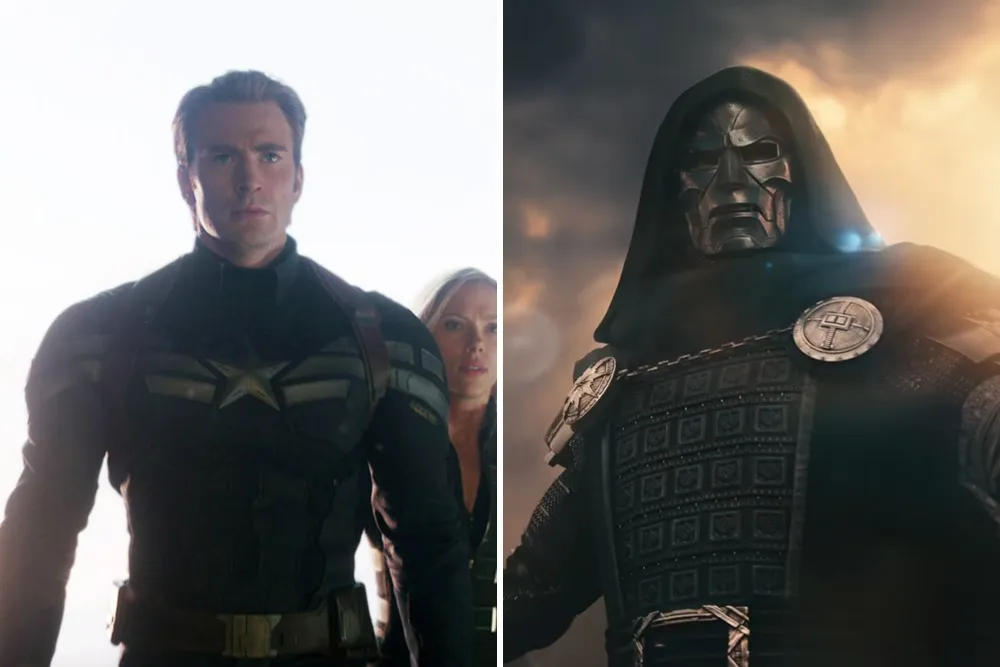
In the lead-up to “Avengers: Doomsday,” Marvel has re-released “Avengers: Endgame” in theaters with four brand new scenes that tie directly into the sprawling team-up film releasing on Dec. 18. Retitled “Avengers: Endgame Encore,” this slightly longer version of the 2019 blockbuster adds four minutes of new footage with characters like Robert Downey Jr.’s mega-villain Doctor Doom, Tom Hiddleston’s Loki and Mark Ruffalo’s Bruce Banner to the already jam-packed movie.

Related Stories

Marvel started building the hype for “Doomsday” a year ahead of its release with four short teasers attached to last year’s “Avatar: Fire and Ash.” The first revealed that Steve Rogers (Chris Evans) and Peggy Carter (Hayley Atwell) have a son; the second focused on Thor (Chris Hemsworth) and his adopted daughter; the third showed Prof. Xavier (Patrick Stewart), Magneto (Ian McKellen) and Cyclops (James Marsden) from Fox’s “X-Men” universe crossing into the MCU; and the fourth brought together Black Panther (Letitia Wright) and the Wakandans with the Fantastic Four, who traveled from their universe.

Popular on Variety

These new “Endgame Encore” scenes were shot during “Doomsday” production and added to the re-release to bridge the two massive “Avengers” stories. The first scene takes place during Steve and Peggy’s dance in the closing of “Endgame.” As fans saw in the original movie, Steve has hung up his Captain America costume, passed the star-spangled shield down to Sam Wilson (Anthony Mackie) and finally settled down with his long-lost love Peggy after traveling back in time. But now, they get a surprising knock at their door from none other than the Norse trickster god, Loki. The last time we saw the reformed villain was in the finale of “Loki” Season 2, where he resigned himself to holding up the entire multiverse for the rest of time. But before that, it seems that Loki, in his Time Variance Authority uniform, pays Steve and Peggy a visit, perhaps to discuss how they’ve created an unstable branch in the multiverse with Steve’s time travel.

“Loki” gets another look with a fellow scene that takes place in the Time Variance Authority with Mobius (Owen Wilson), Casey (Eugene Cordero), Ouroboros (Ke Huy Quan) and Miss Minutes (Tara Strong). They notice that two Earths are about to collide in an incursion and begin firing on each other. More alternate worlds start colliding and terminating, and it’s revealed that the entire multiverse is collapsing. Could those two Earths be Fox’s “X-Men” universe and the mainline MCU world? We already know that Prof. Xavier, Magneto, Cyclops, Mystique (Rebecca Romijn), Nightcrawler (Alan Cumming) and Gambit (Channing Tatum) will cross into the MCU, so this may set up their clash with the Avengers that was teased in the “Doomsday” trailer.

Another new scene with Bruce Banner pops up during the credits and takes place after he’s apprehended in “Spider-Man: Brand New Day.” In this summer’s record-breaking blockbuster, Bruce loses control and is unable to stop from transforming into the Hulk when his mind is controlled by Jean Grey (Sadie Sink). Spider-Man (Tom Holland) beats the super-strong, green giant, and Bruce is taken to a secure medical facility. In the new “Endgame Encore” credits scene, Bruce is in an underground bunker tinkering on a serum to suppress his Hulking out. All of a sudden, Doctor Doom breaks into Bruce’s facility and Bruce turns into the roaring Hulk to face him, but we don’t see what happens next. Does this mean Bruce and/or Hulk will reappear in “Doomsday, and will he be under Doctor Doom’s control?

The final new scene appears at the very end of the credits, when the original “Endgame” had a mysterious, metal-clanging sound in the closing moments. When “Endgame” first released, diehard fans realized that the noise was from “Iron Man” when Downey Jr. was forging his powerful suit of armor. Now, we see a flashes of Doctor Doom making his metal mask with the same sound being played. It’s a dark twist and seems to hint that Doom and Iron Man, while both played by Downey Jr., may also have their origins mirrored.

“Avengers: Doomsday” hits theaters on Dec. 18 — the same day as “Dune: Part 3,” setting up a “Dunesday” showdown. With all of the new scenes, advance teasers and year-long countdown clock, Marvel and Disney are hoping “Doomsday” ends up being another smash hit in the wake of “Spider-Man: Brand New Day’s” record-setting run.


Source: Variety

Variety Power of Women: Industry Leaders Mingle With Stars to Celebrate Female Empowerment and Philanthropy

A packed lineup of talent and industry executives stepped out for Variety’s Power of Women event at the Beverly Hills Hotel on Wednesday night.

Making the rounds at cocktails and inside the ballroom were movers and shakers from the town’s stop studios and platforms. Executives included Warner Bros. TV Group’s Channing Dungey, Disney’s Debra OConnell and Yvett Merino, Amazon’s Kelly Day and Sue Kroll, Disney’s Ayo Davis, Netflix’s Pamela Levine and Tracey Pakosta, Paramount’s Jennifer Dodge, AMPAS’ Jennifer Davidson, screenwriter Aline Brosh McKenna, along with buzzy stars including Paige DeSorbo, Stassi Schroeder, Karen Pittman and Paula Patton.

Jennifer Hudson, Pearlena Igbokwe, Melissa McCarthy and Sharon Stone were honored at the event, hosted by comedian Iliza Shlesinger. The evening was a celebration of the philanthropic efforts of the four honorees as well as the several dozen women recognized in Variety’s annual Women’s Impact Report.


Source: Variety

5th Annual Best in Show | Pets Art Competition: 6 Top Cats

✓Showcase your talent and win big in Artists Network prestigious art competitions! Discover competitions in a variety of media and enter for your chance to win cash prizes, publication in leading art magazines, global exposure, and rewards for your hard work. Plus, gain valuable feedback from renowned jurors. Let your passion shine through – enter an art competition today!

Watch our Competitions page for the 6th Annual Best in Show | Pets Art Competition! 

TOP CAT WINNER 

Blue by You (oil on panel, 8 x 8) by Diane Hoeptner

“Sibling rescues as witnessed at a Northeast Ohio animal shelter were the inspiration for Blue by You. I loved how differently they presented here. One looks rather forlorn; the other is occupied with grooming. 

“My intention was to capture what I saw, based on reference photos taken at the shelter and my memory, and try to accentuate the differences between the cats. I had a vague notion to play up opposing colors: blue and orange. I cooled down the background colors and then spent a lot of time fine-tuning the fur texture and patterns. 

“Nearing the end, I decided the piece needed more oomph. I tried a band of saturated turquoise in place of the shelter-issued white identification collar, and it was the finishing touch that brought the composition together. It’s a good reminder that, sometimes, it’s those last strokes that can really make a painting.”
—Diane Hoeptner

Why it Stands Out

“This one hit me straight in the heart at the very first glance! Aside from the confident brushwork and daring composition, this pose packs an emotional punch. The softly harmonious colors enhance the sweetness between these two cats, and their connection transcends mere felinity, attaching deeply to the viewers’ humanity.”
—Rita Kirkman, Juror 

Honorable Mentions

Abbee (acrylic on board, 2 x 3) by Linda Rossin
Footloose (acrylic on canvas, 36 x 12) by Vie Dunn-Harr
King of Time (charcoal on paper, 13 x 20) by Rosanna Gaddoni
Jasmine (acrylic on panel, 30 x 24) by Jasmine M. Brodrick
The Critic (watercolor batik on rice paper, 14 x 19) by Kathie George

Meet the Artist

Ohio-based artist Diane Hoeptner is known for her small oil paintings of cats. Drawing inspiration from rescue shelters, cat shows and rural farms, she creates evocative narratives that resonate with collectors worldwide. In addition, small animals, vintage patterns, drifting leaves, and butterflies offer enchanting components to her compositions. Notable books featuring her art include Cats in Art, The Book of the Cat and Daily Painting. She holds a B.A. in studio arts from California State University, Northridge.

VISIT THE ARTIST’S WEBSITE


From Our Shop


Source: Artists Network

Pet Project | Winners of the 5th Annual Best in Show Pets Art Competition 

✓Showcase your talent and win big in Artists Network prestigious art competitions! Discover competitions in a variety of media and enter for your chance to win cash prizes, publication in leading art magazines, global exposure, and rewards for your hard work. Plus, gain valuable feedback from renowned jurors. Let your passion shine through – enter an art competition today!

Showcase your talent and win big in Artists Network’s prestigious art competitions! Discover competitions in a variety of media and enter for your chance to win cash prizes, publication in leading art magazines, global exposure, and rewards for your hard work. Plus, gain valuable feedback from renowned jurors. Let your passion shine through – enter an art competition today! 

We’re pleased to present the winners of our annual competition, juried by Patrick Saunders (Dog Category), Rita Kirkman (Cat Category), and John Plishka (Other Category), with Best in Show selected by our editorial team. Thank you to everyone who entered! Your work not only makes for an exceptional field, but also helps support efforts to reduce animal homelessness and suffering through our partnership with the American Society for the Prevention of Cruelty to Animals (ASPCA). 

TAKE A LOOK AT THE WINNERS’ CIRCLE

BEST IN SHOW

Velvet (watercolor on paper, 15 x 13) by Bev Jozwiak

6 DOG WINNERS

Puppy in Profile (Fraser) (oil on canvas, 12 x 9)
by Jill Macdonald

6 CAT WINNERS

Blue by You (oil on panel, 8 x 8) by Diane Hoeptner

6 OTHER PETS WINNERS

Antisocial Butterfly (colored pencil on paper, 18 x 24) by Kate Haanraadts

Watch our Competitions page for the 6th Annual Best in Show | Pets Art Competition! 


From Our Shop


Source: Artists Network

Watercolorist Bev Jozwiak Takes Best in Show   

✓Showcase your talent and win big in Artists Network prestigious art competitions! Discover competitions in a variety of media and enter for your chance to win cash prizes, publication in leading art magazines, global exposure, and rewards for your hard work. Plus, gain valuable feedback from renowned jurors. Let your passion shine through – enter an art competition today!

Watch our Competitions page for the 6th Annual Best in Show | Pets Art Competition! 

BEST IN SHOW WINNER  

Velvet (watercolor on paper, 15 x 13) by Bev Jozwiak

 “I can’t live without pets. I’ve had many over the years—mostly cats and dogs—but fish, parakeets, and even a chameleon have all found their way into my heart and home. 

“Creating a seemingly effortless painting isn’t as easy as it appears. Watercolor is an elusive medium and has a mind of its own. Here are just some of the things that cross my mind while painting: shape, value, color, movement, size, unity, harmony, contrast, dominance, and balance. 

“I tend to be a very direct painter. I paint on Stonehenge Aqua hot-pressed paper, which accommodates my fast, painterly style, allowing the paint to glide easily. Like the Impressionists, I try to place different colors next to one another. You can see the ochres, pinks, and blues in Velvet, and yet it still reads like a gray bunny. I felt like the area under the neck was a little flat, so I “threw” gesso into the wet paint. I’m not a purist; I do whatever I think will work. I ruin some paintings this way, but to me, nothing ventured, nothing gained.”
—Bev Jozwiak

Why it Stands Out  

“This is a fantastic painting with an energetic, full-of-life quality. The fabulous, seemingly spontaneous brushstrokes and beautifully placed splashes of color create a captivating piece that keeps you coming back and finding something new in each look.”
—John Plishka, Juror

More Works by Bev Jozwiak

Fetch (watercolor on paper, 11 x 16) by Bev Jozwiak
Hitchin’ a Lyft (watercolor on paper, 18 x 22) by Bev Jozwiak
Marmalade (watercolor on paper, 14 x 12) by Bev Jozwiak
Squirrel! (watercolor on paper, 11 x 22) by Bev Jozwiak
Tipsy (watercolor on paper, 18 x 26) by Bev Jozwiak

Meet the Artist

International award-winning artist Bev Jozwiak graduated with honors from Western Washington University with a degree in fine art and a minor in art history. She’s a Master Signature Member of the National Watercolor Society and a Signature Member of American Watercolor Society, Transparent Watercolor Society of America ,and Watercolor West, among others. Jozwiak is a popular art instructor, offering workshops throughout the U.S., and has been a juror for prestigious national exhibitions.


From Our Shop


Source: Artists Network

The Power of Perspective Center

✓Showcase your talent and win big in Artists Network prestigious art competitions! Discover competitions in a variety of media and enter for your chance to win cash prizes, publication in leading art magazines, global exposure, and rewards for your hard work. Plus, gain valuable feedback from renowned jurors. Let your passion shine through – enter an art competition today!

When it comes to working with linear perspective, the concept of “perspective center” is one of the most valuable tools to understand. Whether you’re working with elaborate, detailed drawings, or just need a quick tool for rough sketches, having an awareness of perspective center is helpful in a variety of ways. Let’s take a look at what it is, and how it’s useful.

If you are new to working with linear perspective, it can be helpful to have a basic understanding. Here are some helpful resources to get you started:

Read this Article: Beginner Drawing: Linear Perspective: The Basics

Take this Online Course: Perspective Drawing: Understand Linear Perspective

Practice with this Book: Perspective, by William F. Powell

What is Perspective Center?

Let’s begin with a simple, 2-dimensional rectangle, drawn without any use of linear perspective. There are two ways to find its center: 

Approach #1: Measure the midpoints of each side and use lines to connect the points opposite one another. The intersection of these lines marks the center of the rectangle.

Approach #2: Use diagonal lines to connect opposing corners. The intersection of these diagonal lines indicates the center of the rectangle without the need to measure.

Now use the same approach to a rectangle drawn in perspective:

Approach #1: Use a ruler to measure the midpoints of each side, connect the points on opposing sides, and mark the center.

Approach #2: Connect opposing corners with diagonal lines to indicate the center at the point of intersection. 

When using approach #1, notice how it feels “off”? When we recognize the rectangle as receding, we interpret the center of the rectangle as being too far forward. We intuitively understand that the scale of objects gets smaller as they recede, so the back half of the rectangle should be smaller than the front half.

Using approach #2 appears more correct. It shifts the center of the rectangle back into space so that it appears more correct. We call this “Perspective Center” because it marks the center of the rectangle that is consistent with the perspective of the shape within its environment.

Why is it Useful?

Locating the center of a plane, as drawn in perspective, comes in handy more than you might expect. Here are three common applications

1. Architecture

  1. Use Perspective Center to accurately place the peak of a gabled roof, using a simple vertical line extended from the center of the plane.
  2. Accurately place windows, doors and other architectural elements. Use this process to divide a plane into increasingly smaller sections. First divide a plane in half, then quarters, and eighths, etc.
Use Perspective Center to align the peak of a gabled roof (right facing side), or subdivide a wall in half and quarters.

2. Repeating Elements

Repeating elements, like fence posts, telephone poles and floor tiles can be challenging. Here are a couple of ways you can address these types of elements. Let’s use a line of fence posts as an example.

When you know where the first and last fence posts are placed, place them on the page with orthogonal lines to align the tops and bottoms of the posts. This creates a rectangle that can be first divided into half, then quarters, eighths, etc., with each intersection point indicating the placement of a fence post.

When the first two posts are established and the goal is to repeat that spacing into the distance, follow these steps:

  1. Space the first two posts with the desired spacing.
  2. Use orthogonals extending from the top and bottom of the first post to the vanishing point. These orthogonals will mark the baseline and height of each post. (see red lines in the image below)
  3. Divide the first post in half, and place an orthogonal from that midpoint to the vanishing point. This now indicates the center line of each post.
  4. Mark a diagonal line that originates from the bottom of the first post, passes through the midpoint of the second post, and continues to the upper orthogonal. (see cyan lines in the image below)
  5. The intersection of this diagonal with the upper orthogonal indicates the placement of the third post, which can be drawn as a vertical line. (see yellow lines in the image below)
  6. Repeat this process by moving from one post to the next. Use a diagonal line from the base of post #2, pass it through the middle of post #3, and place post #4 where it intersects with the upper diagonal.

3. Natural Elements

Organic, natural elements—clouds, large rock faces, forests, etc.—can benefit from this strategy as well, even though they might not be geometric in nature or feature regularly spaced elements. Even a rough understanding of the center of a form can help to visualize the scale of your marks or placement of smaller forms in a way that’s consistent with linear perspective. Create a rectangular boundary around the form and follow the steps above to indicate the rough placement of the center of the form. While this may not be entirely accurate, it can serve as an aid to your understanding of the larger complex form.

Perspective Center is used to simplify these groups of trees and visualize the scale of the trees as they recede into space.

Practice

Take time to practice this process and gain an intuitive understanding of perspective center. With any subject drawn in perspective, whether it’s highly accurate or a rough impression, having an awareness of the center of an object can help you control the space of your work.


About the Artist

Scott Maier is an artist, instructor, and a content contributor to artistsnetwork.com. He’s an adjunct instructor at Rocky Mountain College of Art and Design, as well as the author of these instructional art books:

See, Think, Draw: An Easy Guide for Realistic Drawing and Beyond.
The Little Book of Oil Painting Secrets
The Field Guide to Landscape Painting (on pre-order)


Source: Artists Network

Reinventing Visibility

✓Showcase your talent and win big in Artists Network prestigious art competitions! Discover competitions in a variety of media and enter for your chance to win cash prizes, publication in leading art magazines, global exposure, and rewards for your hard work. Plus, gain valuable feedback from renowned jurors. Let your passion shine through – enter an art competition today!

By Daniel Grant

Walk into any prominent art gallery, and you’ll see a notebook on the front desk, inside of which are copies of reviews, notices and feature articles on the artists whose work is on display. Some gallery visitors flip through the pages, but few do much more than scan the headlines to see where the artists have been written up. Perhaps those visitors are seeking a better understanding of what they’re seeing on the gallery walls but, more likely, they’re probably hoping to get a sense of the artists’ standing in the art field.

The number of artist write-ups has been declining in recent years, however. This is largely the result of daily newspapers shrinking their editorial departments, which includes art critics. The most recent example is the firing of Sebastian Smee, art critic for The Washington Post, who lost his job—along with 300 other journalists—in early February. 

Newspapers that used to have full-time critics—such as The Baltimore Sun, The Boston Globe, Chicago Tribune, The Dallas Morning News, Detroit Free Press, Indianapolis Star, Miami Herald, The Philadelphia Inquirer and The Wall Street Journal, among others—no longer do, and the jobs of writers who were originally hired as critics have morphed into general assignment feature writers who may get to do an occasional review. 

Reviews don’t sell newspapers, staff journalists are told, and that’s probably true. For artists, however—not just fine artists but authors and performers, too—the departure of a critic creates an existential loss. Most artist CVs include a “Publications” section that lists where they’ve been written up, and private foundations and governmental arts agencies regularly require that artists include these write-ups when applying for grants or fellowships. 

Regardless of what’s said in these reviews and feature articles, they exist as a form of endorsement. “An artist told me, ‘I don’t care if the review is good or bad, I just want a review, because it’s a record that I existed,’” says George Hemphill, owner of an art gallery in Washington, D.C.  

The decline in the number of newspaper critics has generated a considerable amount of anguish on the part of artists. “Sounds like just another door slamming,” says New York painter Tom Christopher. 

According to Fabio J. Fernandez, executive director of the National Sculpture Society, the cost is, in fact, much greater. “When creative thinkers, writers and makers aren’t given forums to present their work, our entire society and culture suffers as a result,” he says.

The New Gatekeepers

Perhaps the story isn’t all doom and gloom, however, if artists are able to pivot to other ways of promoting themselves—particularly with social media. “I don’t think we’re seeing the end of critical validation, but we are in the midst of an evolution,” says Andy Cushman, account director in charge of visual arts at Blue Medium, a New York-based public relations company serving the visual arts, architecture and design communities. “Social media is an incredible engine for visibility, and for a certain demographic of artists, it has already replaced the critic as the primary driver of attention to their work.”

Too many artists wait to be discovered, or they assume that an art dealer or critic will promote their work to great heights. “I advise artists to focus on what they can control,” says Cushman. “Use the commonplace technologies available to you to improve your core communication, an area I consistently see neglected. As banal as it sounds, email is at the core of every successful venture. Build a list of people you actually know and respect. Send seasonal updates. Use the ‘off-season’ to foster genuine one-on-one dialogues that begin with an email and culminate on Zoom. If the legacy critics aren’t there to bridge the gap between the work and the institution, the artist has to be the one to do it through direct, sustained professional engagement. In the absence of a gatekeeper, artists must be their own advocates.”

Promotional Pivot

“Of course, not every artist has the skills or interest in doing that kind of work,” says Shannon Wilkinson, founder and chief executive officer of Reputation Communications, which works with corporations and business executives. “First and foremost, every artist should have a website.” 

For artists who don’t have a website, there are multiple platforms that will make the building easy. Wilkinson recommends Squarespace. “It has several ready-to-go, predesigned templates,” she says. “You just upload your art to the site, and you’re off.”

Another site that can be useful is the online platform Substack, where, according to Wilkinson, “some well- known art critics and historians are publishing memoir-style reflections and long-form essays on art.” 

Substack is paid for monthly, and users upload their writings, as well as their email lists, to develop a readership. Many Substack users ask their readers to pay a subscription to support their commentaries. (Substack takes a percentage of those earnings.)

Substack has been appealing to many art critics, as it offers subscription income and independence from editorial constraints, which some critics see as a way to escape shrinking or censorious legacy media structures. 

Some artists are also producing podcasts, YouTube and TikTok videos, as well as Instagram and Facebook reels. “All of this requires artists to develop or hone skills that are perhaps foreign to them,” says Wilkinson. “Not everyone is comfortable being videoed, and not everyone is a good writer—but everyone is on online platforms these days.”

About the Artist

Daniel Grant is the author of The Business of Being an Artist.


From Our Shop


Source: Artists Network

Gouache: An Artist’s Guide

✓Showcase your talent and win big in Artists Network prestigious art competitions! Discover competitions in a variety of media and enter for your chance to win cash prizes, publication in leading art magazines, global exposure, and rewards for your hard work. Plus, gain valuable feedback from renowned jurors. Let your passion shine through – enter an art competition today!

Gouache is a versatile, water-based paint known for its rich, opaque colors and smooth, matte finish. Like watercolor, it can be diluted with water, but its higher pigment concentration allows artists to create bold, solid layers of color. Gouache is popular among artists and illustrators because it’s easy to blend, dries quickly, and can be reworked with water even after it dries. Its unique combination—with the flexibility of watercolor and the vibrant coverage of an opaque paint—makes it an accessible medium for artists of all skill levels. Here, we’ve assembled a collection of articles that offer more information about the medium and how to maximize its full potential.

Getting Started

Beginner's Guide to Gouache

Whether you’re a professional artist or just starting out, adding gouache to your toolkit is definitely worth considering. Check out this getting-started guide, in which artist Scott Maier walks through the tools and supplies, and basic techniques.


Painting With Gouache: 6 Tips for Success

Oh My Gouache
Artwork by Uma Kelkar

Watercolor artist Uma Kelkar shares her firsthand expertise with the medium to help you on your way to painting with confidence and building strong results. 


3 Tips for Working on Toned Paper 

Colorado artist Judd Mercer finds inspiration in his mountainous surroundings, turning to gouache and toned paper as his go-to materials for quick, expressive plein air paintings. Learn his trio of tips for achieving success. 


From Our Shop


Source: Artists Network

Back to School With Winslow Homer

✓Showcase your talent and win big in Artists Network prestigious art competitions! Discover competitions in a variety of media and enter for your chance to win cash prizes, publication in leading art magazines, global exposure, and rewards for your hard work. Plus, gain valuable feedback from renowned jurors. Let your passion shine through – enter an art competition today!

The first day of a new school year—traditionally the Tuesday after Labor Day in the U.S.—means new notebooks, fresh pencils and, if you’re lucky, a little art history. Step into the classroom paintings of Winslow Homer (American, 1836–1910) and find out if you can make the grade on six school-day scenes from one of America’s great painters.

Shown above: School Time (ca 1874; oil on canvas, 12 1/2 x 19 1/4) by Winslow Homer. Credit: National Gallery of Art, Collection of Mr. and Mrs. Paul Mellon, 2014.18.19. 


From Our Shop


Source: Artists Network

Latest Posts