Preloader

Inspiration

Showstoppers: Jimmy Wright

✓Showcase your talent and win big in Artists Network prestigious art competitions! Discover competitions in a variety of media and enter for your chance to win cash prizes, publication in leading art magazines, global exposure, and rewards for your hard work. Plus, gain valuable feedback from renowned jurors. Let your passion shine through – enter an art competition today!

An exhibition of the artist’s emotionally charged floral paintings goes on view, in London, for the month of September.

By Anne Hevener

Sun and Shadow (1999–2001; oil on canvas, 96×72)

The celebration of the work of American artist Jimmy Wright is hopping the pond this month with a 5-week exhibition at Thomas Dane Gallery, in London, in collaboration with Chicago gallery, Corbett vs. Dempsey. Entitled “After the War,” the London show will feature the artist’s flower paintings, made in oil and pastel, from 1992 onwards. 

Born in Union City, Tenn., in 1944, Wright grew up in rural Kentucky. As a young man, he moved first to Chicago, where he studied at The Art Institute of Chicago, and then moved to New York City in 1974, where he has lived since. It was when his partner, Ken Nuzzo, was diagnosed with AIDS, in 1988, that Wright began his paintings of flowers, infusing the traditional still life subject with an emotional vitality that communicated feelings of pain, grief and the enduring power of love. Characterized by thick applications of paint and an underlayer of acrylic modeling paste that creates a sculptural quality, Wright’s initial series of works, called “Flowers for Ken,” launched what would be a lasting creative inquiry. The Thomas Dane Gallery writes that the artwork being shown in the “After the War” exhibition, “can be seen as portraits of the artistic community lost to the pandemic.” 

An Inside Look at Sun and Shadow

Wright’s story of the making and meaning of the piece, Sun and Shadow (seen above; 1999–2001; oil on canvas, 96×72), a monumentally sized piece that the artist worked on for more than three years, describes the hidden tension behind bold, powerful floral imagery and the fragility they represent:

“I had completed a series of flower-basket paintings as diptychs—familial twin baskets of flowers that could be installed either as a single painting in two parts, averaging 12 feet in length, or as two individual, 6-foot paintings that communicated across a room or wall,” he says. “The Shadow is the top basket of cool blue sunflowers—a heavy, overbearing storm cloud passing over the lower basket of warm, sunlit sunflowers, The Sun, which formally pushes forward in the pictorial space. A silver slice of white light on the left side of the composition acts like the lever on a slot machine, propelling the heavy, cool basket forward in an endless, visually dynamic struggle of opposing forces on a flat canvas.

“I call my flower paintings ‘Trojan Horses,’ because—while they masquerade as appealing, seductive still lifes of flowers—they are memento mori representations of nature that explore themes of loss, survival and memory, serving as monuments to the fragility of life and beauty.”

“After the War” is on view from September 4 to October 1, 2026, at Thomas Dane Gallery, 11 Duke Street, St James’s, London SW1. 

To learn more about the artist, Jimmy Wright, visit jimmywrightartist.com.

Works on Paper 

In an article for Pastel Journal (February 2019), Wright advised artists not to let technique overpower the art. “Many artists put the cart before the horse,” he said. “And they apply technique with such rigidity that it suffocates the art. Technique has to come out of the search for art.” Here are some additional examples of works by the artist, created in pastel, that demonstrate putting the expression at the forefront.

Moth to Flames (pastel on paper, 30×20)
Red Pompeii, No. 4 (pastel on paper, 29½x22½)
Gather Together, No. 1 (pastel on paper, 41×29)
Sunflower Moon (pastel on paper, 29×27)


From Our Shop


Source: Artists Network

The Art of Travel Painting: Capture Memories on Location

✓Showcase your talent and win big in Artists Network prestigious art competitions! Discover competitions in a variety of media and enter for your chance to win cash prizes, publication in leading art magazines, global exposure, and rewards for your hard work. Plus, gain valuable feedback from renowned jurors. Let your passion shine through – enter an art competition today!

[SPONSORED CONTENT]

Traveling offers a unique window into new cultures, distinctive landscapes, and unforgettable moments. While it’s easy to rely on smartphones to snap quick photos, being an artist offers a profound alternative that allows us to slow down and connect more deeply with world. Embracing art on your journeys can transform a simple vacation into a deeply immersive and reflective experience.

Tips for Painting on Location

When you plan to paint during your travels, the first step is to be highly intentional about your energy and focus. Time on location is often limited, meaning you cannot do everything. Rather than stressing over the absolute perfection of drawing accuracy or complex compositional framing, consider shifting your perspective entirely. Use the painting process primarily to record your personal experience, emotions, and presence in the moment. Letting go of rigid structural expectations frees your mind from distractions and anchors you in the immediate environment.

To make the most of your time on location, your choice of materials plays an essential role. It is highly recommended to pack high-quality paints, brushes, and surfaces that you are already thoroughly familiar with. Traveling is not the time to test new paints, mediums or equipment. When you use tools you trust, you already know exactly how the colors mix and how the paint performs on the surface. This ensures you do not waste precious time fighting your materials when you should be absorbing the landscape.

When painting outdoors, let your primary artistic goal be an exploration of changing light and color. The aim isn’t to create a flawless masterpiece on the spot, but to capture an authentic color study that reflects your real-time sensory experience.

Working with Tusc & Pine Artists’ Oil Paints as part of my plein air setup.

What You’ll Need

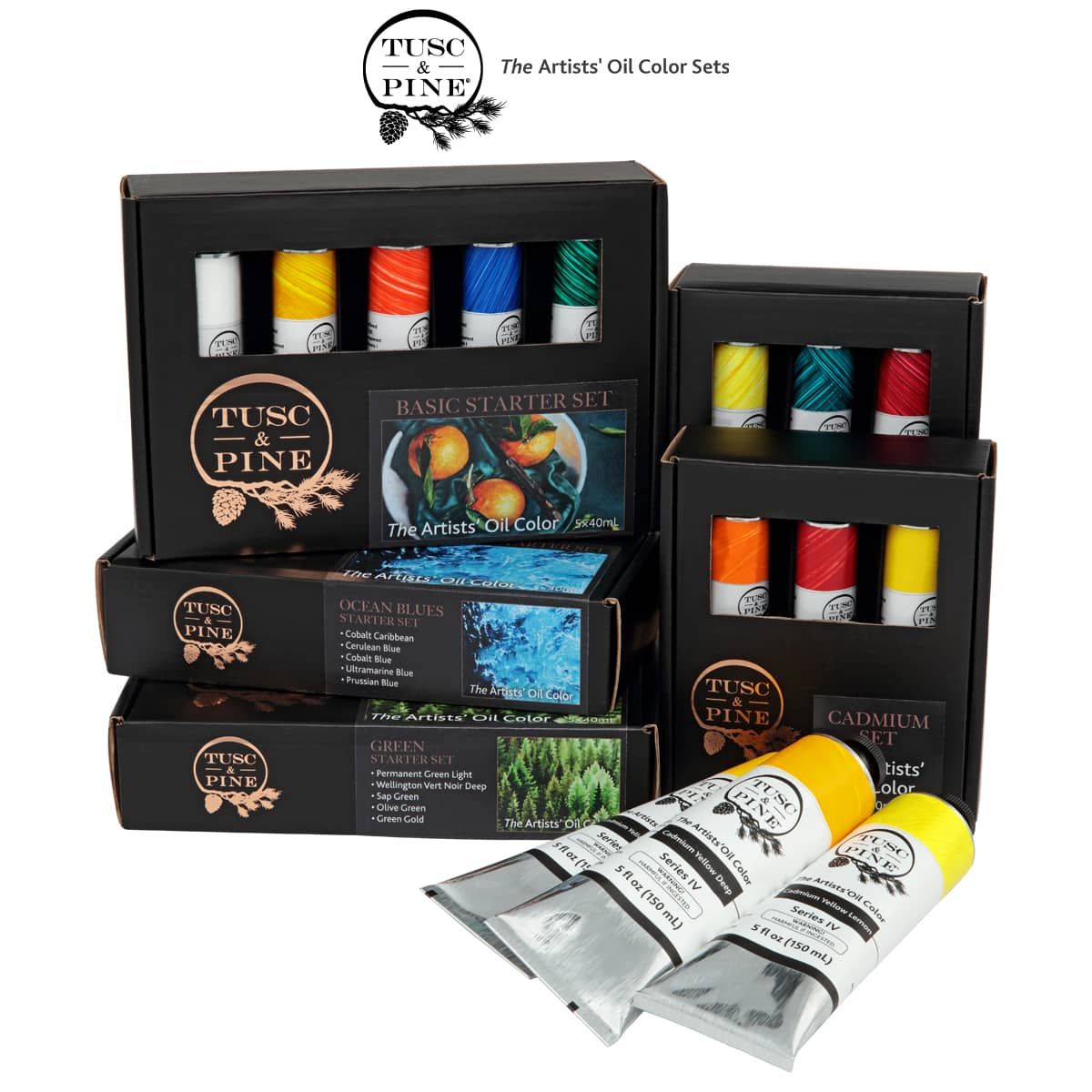
Tusc & Pine Artists’ Oil Paints

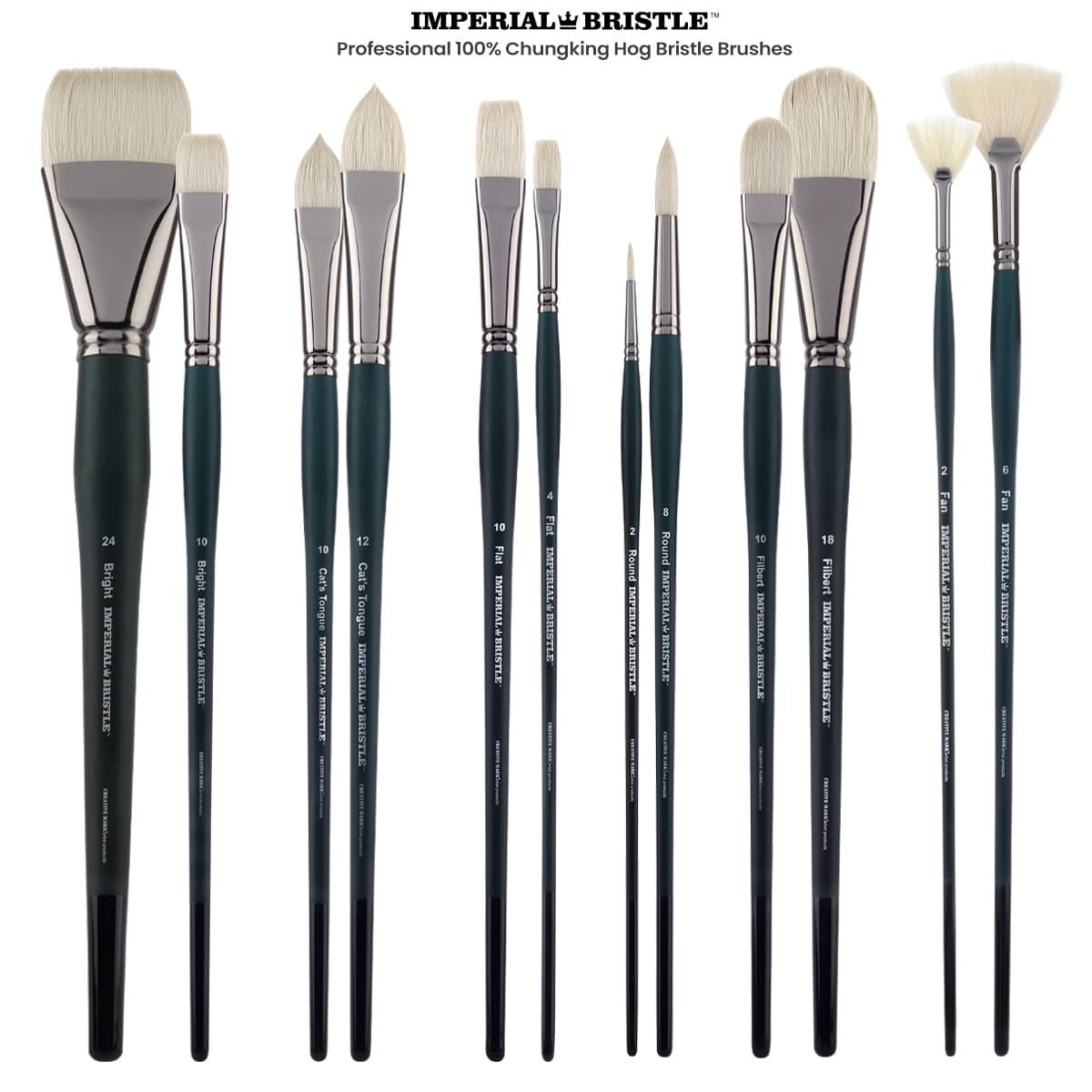
Imperial Hog Bristle Brushes

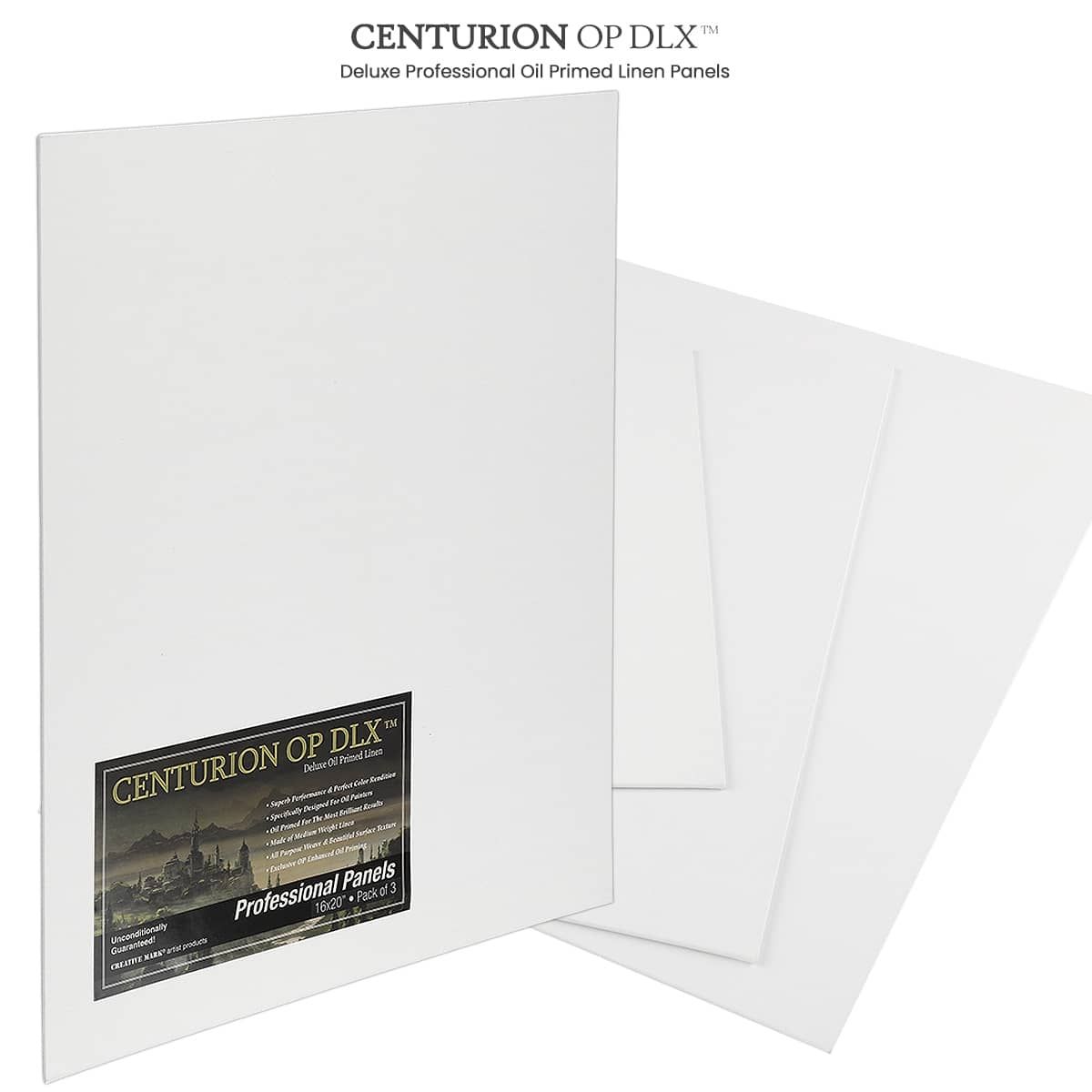
Centurion OP Professional Oil Primed Archival Linen Panels

Painting Indoors

Once your outdoor session is complete, your plein air study becomes a valuable building block. Back in the controlled space of a studio, you can revisit the piece. Here, away from the changing elements, you can use reference photos to adjust proportions, fix drawing errors, and refine the composition. In this workflow, the initial outdoor painting doesn’t act as a rigid, restrictive roadmap; instead, it serves as a powerful psychological trigger that unlocks memories of the experience.

Studio painting completed using the plein air study as a reference and Tusc & Pine Artists’ Oil Paints

Ultimately, travel painting leaves you with three distinct gifts: your raw plein air study, a finished studio piece, and a concrete, multi-sensory memory of the space. Long after you return home, looking at your work will bring back more than just a visual image. It will vividly recall the sounds of the environment, the scent of the air, the quiet atmosphere, and the exact feeling of watching the light move across the land. By being selective with your energy and prepared with your tools, you can build a deeper, lifelong connection to the world through your art.


About the Artist

Scott Maier is an artist, instructor, and a content contributor to artistsnetwork.com. He’s an adjunct instructor at Rocky Mountain College of Art and Design, as well as the author of these instructional art books:

See, Think, Draw: An Easy Guide for Realistic Drawing and Beyond.
The Little Book of Oil Painting Secrets
The Field Guide to Landscape Painting (on pre-order)


Source: Artists Network

Back to School With Winslow Homer

✓Showcase your talent and win big in Artists Network prestigious art competitions! Discover competitions in a variety of media and enter for your chance to win cash prizes, publication in leading art magazines, global exposure, and rewards for your hard work. Plus, gain valuable feedback from renowned jurors. Let your passion shine through – enter an art competition today!

The first day of a new school year—traditionally the Tuesday after Labor Day in the U.S.—means new notebooks, fresh pencils and, if you’re lucky, a little art history. Step into the classroom paintings of Winslow Homer (American, 1836–1910) and find out if you can make the grade on six school-day scenes from one of America’s great painters.

Shown above: School Time (ca 1874; oil on canvas, 12 1/2 x 19 1/4) by Winslow Homer. Credit: National Gallery of Art, Collection of Mr. and Mrs. Paul Mellon, 2014.18.19. 


From Our Shop


Source: Artists Network